A successful day skiing with children: our guide to starting the day well
Do you enjoy going skiing with the family, but worry about certain moments with the children? Are you concerned that they might get too cold or too hot? Forget some essential accessories? Or have a tiredness-related meltdown? Rest assured, a few simple tips can help you manage these situations more easily. Ekosport-Rent shares its advice to help you enjoy a family skiing day in the best possible conditions.
In summary
A family skiing day can quickly become challenging if children get cold, hungry or too tired. To make the most of the slopes, it is essential to adapt their clothing to the weather using the three-layer system and pack a backpack with water, snacks, sun cream and spare clothing. Their pace, speed and choice of pistes should also match their ability, with regular breaks throughout the day. Sport 2000 and Ekosport-Rent share their advice for organising an enjoyable, comfortable and safe day skiing with children.
Dress children properly before skiing: the key to a successful day
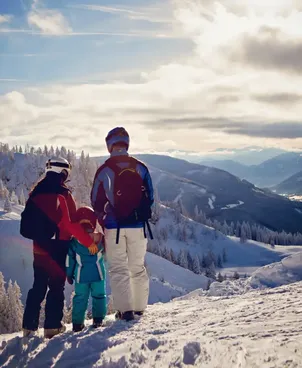
Just like adults, children need to be dressed according to the weather conditions and should feel completely comfortable in their clothing. Here are some tips to dress them as comfortably as possible.
Essential clothing and accessories
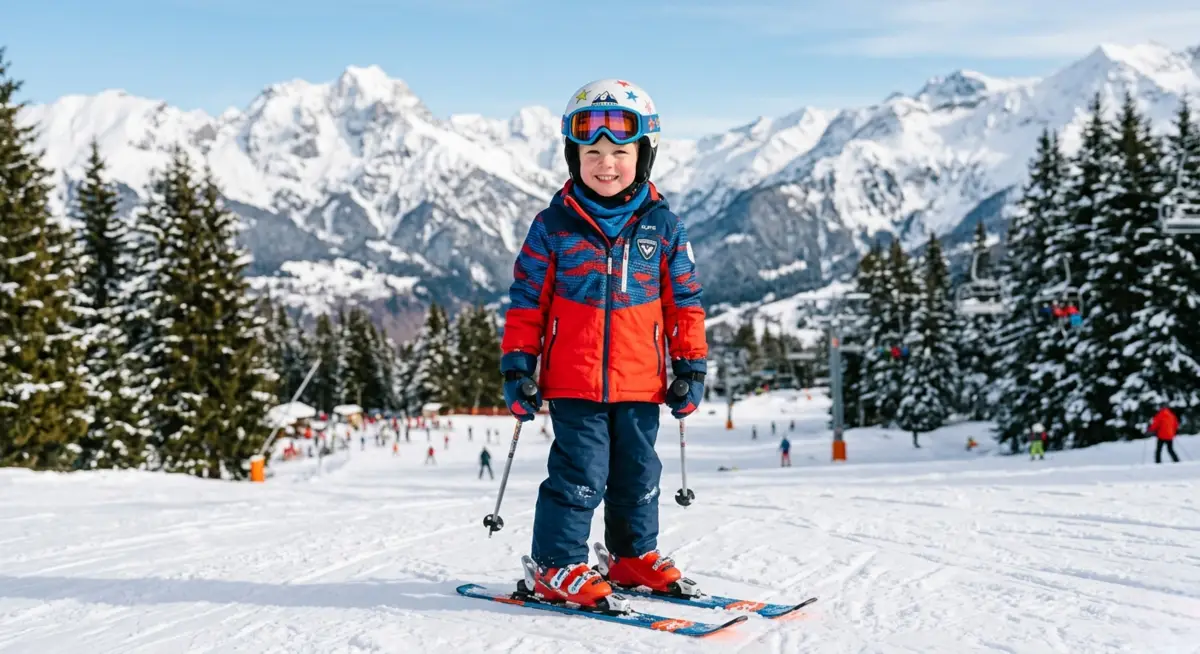
First, remember that children will always need the following, whatever the temperature, wind or other conditions:
ski trousers and a ski jacket, or a ski suit;
breathable socks in the correct size;
a ski helmet;
gloves or mittens;
ski goggles, or potentially sunglasses for younger children who may find a large pair of goggles uncomfortable.
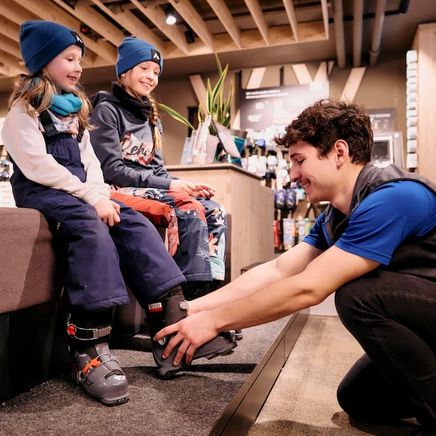
Ekosport-Rent tip: if any clothing or equipment is new, let your children wear it before your skiing holiday. This will help them get used to it and feel more comfortable once they are on the slopes.
Adapt their clothing to the weather
The essential principle for dressing properly for skiing is the three-layer system:
a breathable base layer to wick away sweat and keep your child dry, such as thermal underwear;
a second insulating layer to retain warmth, such as a fleece;
a protective outer layer to protect against the elements, such as a windproof or waterproof ski jacket.
Then adapt their clothing according to the weather conditions. In cold and windy weather, add a neck warmer, choose a warm ski jacket and, if necessary, a beanie that can be worn under the helmet. Conversely, if the weather is milder, make the second layer lighter and/or choose a lighter jacket.
Essentials to carry in your backpack: our list for a family day on the slopes
Once you are at the top of the slopes, you need to be able to manage any situation independently. This could be useful if the children get hungry or if you need to change your route because of poor visibility, for example.
To prepare properly without overloading yourself, create a checklist of essentials to take onto the slopes beforehand. You can use the following general list and adapt it to your own situation:
sun cream and lip balm, to protect both parents and children throughout the day;
a water bottle, ideally with a sports or spout-style lid, which is easier for younger children to use;
a selection of snacks based on your children's preferences, such as fruit purée pouches, biscuits, fresh fruit or dried fruit;
tissues;
spare accessories, such as a pair of gloves, socks and a neck warmer, so you can change your child's clothing if they get wet and cold;
a plastic bag for packaging and other rubbish, as well as wet accessories;
a fully charged phone with the ski resort or ski area app;
a paper piste map, making it easier to find your way around and choose the best routes.
Adapt to your children's pace: the best way to prevent tiredness and falls
Once you are at the top of the slopes, you need to be able to manage any situation independently. This could be useful if the children get hungry or if you need to change your route because of poor visibility, for example.
To prepare properly without overloading yourself, create a checklist of essentials to take onto the slopes beforehand. You can use the following general list and adapt it to your own situation:
sun cream and lip balm, to protect both parents and children throughout the day;
a water bottle, ideally with a sports or spout-style lid, which is easier for younger children to use;
a selection of snacks based on your children's preferences, such as fruit purée pouches, biscuits, fresh fruit or dried fruit;
tissues;
spare accessories, such as a pair of gloves, socks and a neck warmer, so you can change your child's clothing if they get wet and cold;
a plastic bag for packaging and other rubbish, as well as wet accessories;
a fully charged phone with the ski resort or ski area app;
a paper piste map, making it easier to find your way around and choose the best routes.
Adapt to your children's pace: the best way to prevent tiredness and falls
Children obviously do not have the same physical abilities or resistance to fatigue as adults. This is something you need to keep in mind, as a tired child is more likely to make mistakes, stop enjoying themselves, fall or become upset. At that point, the day can quickly become difficult for the whole family.
Ski at the right pace
When skiing with children, unless they are already little champions, you need to adapt your speed. Choose simple and safe lines without putting them under unnecessary pressure. The aim is for your child to feel in control and confident, so that they can progress quickly while keeping a smile on their face throughout the day.
Choose suitable pistes
Choosing the right pistes is also very important, whether in terms of gradient, technical difficulty, width or how busy they are. To start the day, choose wide green and blue pistes, ideally well-groomed and not too busy.
However, if your child is confident and wants to try more technical pistes, do not hold them back unnecessarily either! The key is to make sure they can control their speed and are in an environment where they feel reassured and are enjoying themselves.
Take smart breaks
Breaks are not a restriction: they help you extend the day in the best possible conditions. Plan them before the first signs of tiredness and make sure you take your breaks in suitable places, such as a safe area at the side of the piste with enough space or a designated rest area. Use them to have a snack, drink some water or simply rest.
If necessary, make use of mountain restaurants to take a break somewhere warm. If your children are cold and cannot warm up, they may quickly want to head home.
Finally, remember to vary the activities. The aim is not to ski non-stop, as this is tiring both physically and mentally. For example, enjoy a fun session on a fun piste, take time to observe the surrounding nature, swap skis for a toboggan run, and so on.
Choosing the right time to start the day: an important point for stress-free skiing
One final factor that can make a difference is the time at which you start your day. If you arrive in the minutes immediately after the lifts open, you may face large crowds. Waiting in a queue for a long time, especially in the cold, can be difficult for younger children.
Two options are therefore worth considering: arrive 10 to 20 minutes before the ski area opens, or wait 30 minutes to 1 hour after opening. It can also be useful to shift your lunch break, so you can enjoy quieter pistes between 12pm and 2pm.